Borrowed Calm
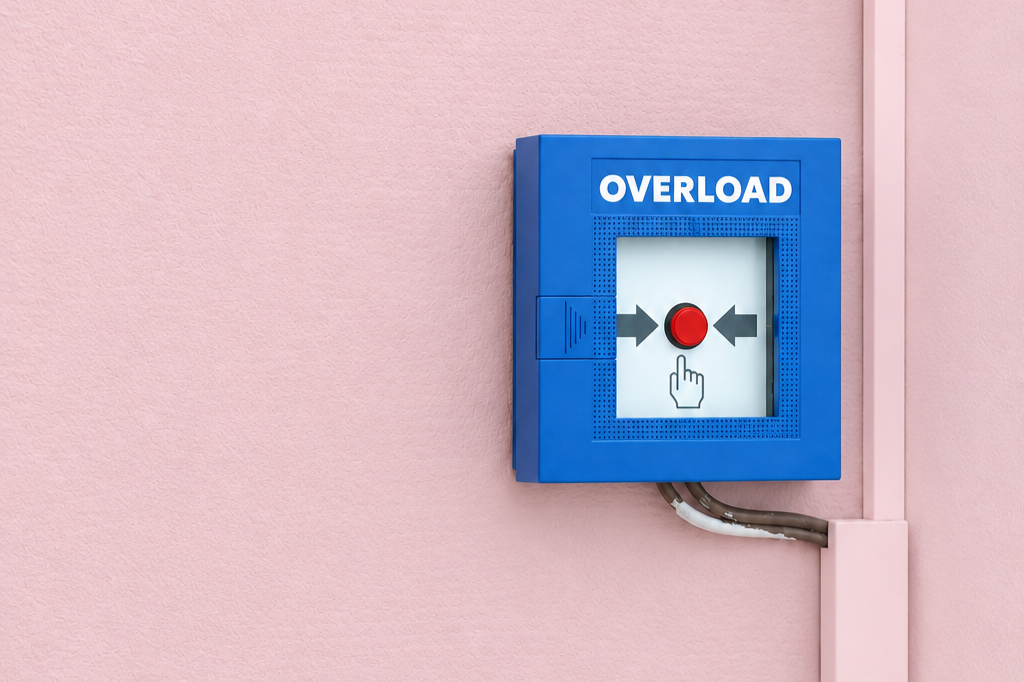
It's been a big couple of weeks. A confluence of work complexity, an aging parent emergency, vicarious HSC stress and a spider bite (a longer story). Somewhere in the middle of all that, the term 'borrowed calm' crossed my desk.
It sounded like borrowing a nice book from the library. Pick it up, use it to find some calm in the middle of the mushroom cloud of chaos, return it. Easy. Win. It turns out borrowed calm is not quite like that, but it can be a band-aid when all the longer-term wellbeing strategies have been squeezed out in the chaos.
The idea itself is not new, it connects to what we already know about stress, recovery and how we regulate each other. When your system is overloaded, you can borrow regulation from something or someone outside yourself. Not by pushing through or by telling yourself to calm down (which, for the record, has never worked for anyone in the history of calming down). Your body syncs with something steadier than it is right now and it can anchor to that calm.
The cruel irony of overload is practices that keep you well can be the first things to fall away when you need them most. You know what helps, but sometimes just can't find the time to access them when the stress cloud descends. It’s at this point that borrowed calm can be useful and it sits alongside the longer-term work of setting boundaries, making intentional values-aligned decisions and protecting your capacity. These build over time and assume a level of functioning that overload can erode. Borrowed calm is minutes, not hours.
For leaders, when you are under pressure, your perspective shrinks and your decisions get faster but not better. You lose access to the thinking your role requires, and you're often the last person to notice. Borrowing calm is a approach to get your brain back online so you can open your aperture and do your job and life more effectively.
Three things to try to borrow calm
Music. Try putting on some soothing music of choice and really listen with full attention until your body responds. Certain sound frequencies directly influence the part of your nervous system that shifts you from stress into a calmer state. Your heart rate will start to match the rhythm of what you're hearing.
A calm person. When you are around someone who is calmer than you are right now, your system can start to settle. Calm is contagious at a physical level, and can be effective, even if they are not giving you advice. A five-minute phone call with the calm person can do more than an hour of trying to talk yourself down.
Getting outside. Even a few minutes in a natural environment lowers your stress hormones. It doesn’t have to be a bushwalk, it can be as simple as stepping outside for three minutes amongst trees, sky and fresh air. Your body responds to the change before your thinking mind catches up.
None of this is complicated, and you probably already know what you need to reset. The problem is that overload creates a tunnel vision and the things that usually help can get squeezed out. Three minutes for a song feels indulgent when there are things coming from all directions. Calling a friend can feel unproductive when there are fourteen emails marked urgent and you don’t feel like talking.
So this week, I'm heading to my 90s playlist, stepping outside more, finding a zen friend - and ordering some pre-prepared family meals. Sometimes the most strategic leadership decision you make is admitting you are overloaded and trying something small rather than beating yourself up that you’re not doing enough.
As for the spider bite, that is going to take a bit longer.
References and further reading
Stephen Porges, The Polyvagal Theory (2011)
Porges' Safe and Sound Protocol — a music-based intervention built on the relationship between auditory input and nervous system regulation
MaryCarol Hunter et al. (2019), "Urban Nature Experiences Reduce Stress," Frontiers in Psychology ,10,722