A case for struggle.
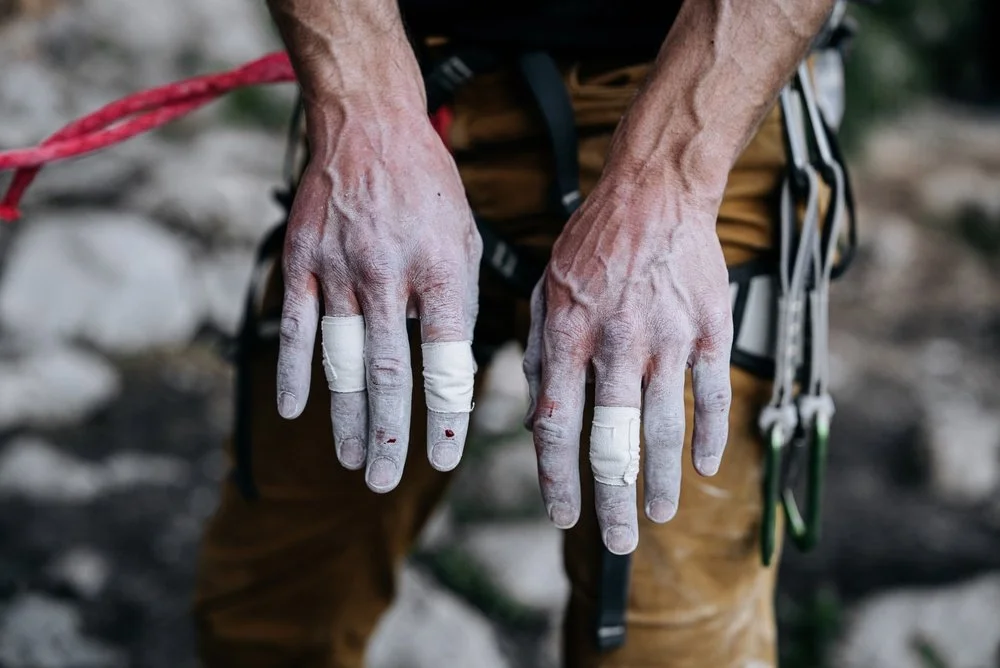
Pope Leo XIV's first encyclical landed last month with a warning. If we outsource all of life's struggles and efforts to machines, he argued, we risk losing what makes us human, because it is through our limitations that we grow, mature, and find meaning.
You don't need to be Catholic to feel the urgency in his words. Every leader right now is being told to move faster and automate to remove any friction in the system. This may yield results at some level, but what happens to your people when you remove the struggle?
We know from decades of motivational research that people don't build competence by being given the answer. They build it by wrestling with a problem and arriving on the other side knowing they were able to do the hard stuff. That sense of capability is the engine room of intrinsic motivation and leads to people caring about their work. It also sharpens thinking, the ability to question assumptions and interrogate what presents as ‘right’ versus what is right. A team trained to accept AI-generated answers without interrogating them is a team that cannot tell you when those answers are wrong, and that should concern every leader.
We also know that people report feeling most creative and most fulfilled when they're stretched beyond their comfort zone. Remove the stretch and, over time, you risk replacing contentment with disengagement. Breakthroughs don't come from smooth processes. They come from people who sat with a problem long enough that their assumptions broke down and new thinking emerged, and that demands the kind of cognitive effort that many efficiency tools replace. The complex problems facing our organisations and our world will not be solved by people who have been conditioned for a quick win.
A personal note
I know about this first-hand. Some years ago I started a Master of Science degree, not having written an essay for over two decades. 'Write an original essay that is your own idea’, they said, 'but you can only use the ideas of others'. The contradiction alone sent me into an Escher-maze-style meltdown. What followed were months of late nights, reading papers that felt like a foreign language, zoning in on an angle, then feeling the whole thing dissolve through my keyboard as the evidence fell apart. Then the demoralising return to a blank page. Weighing up how I would tell my loved ones I had made a mistake, that I would withdraw and return to a version of me they recognised.
But I kept going, primarily out of stubbornness and partly because something in the challenge became an addiction. Over time, the tears dried and the marks showed progress. I started to trust my own thinking, to sense when an argument held together and when it didn't.
That judgment came from all those nights of struggle, something that couldn't be replaced by an algorithm. The growth was in the journey to the outcome, not the outcome alone. It taught me about myself, about resilience and adaptability, and has given me greater value across every aspect of my life - more than the letters next to my name.
This is not about choosing struggle over AI. It is about holding both and being deliberate about where each adds value. AI can accelerate execution and surface information, but it may not build the thinking, judgment and resilience your organisation will need to navigate the complexity and scale of the problems we face today and into the future.
What you can do
Name the struggle, don't fix it. When your team hits something hard, resist the instinct to smooth it over. People perform better when they accept that difficulty is uncomfortable rather than pretending it isn't. Give your team permission to say 'this is hard' without rushing to rescue them.
Connect the hard work to something that matters. Struggle without meaning is just grind. Make sure your team can see why the difficult work matters, whether that's the problem they're solving, the skill they're building, or the contribution they're making.
Make progress visible. People are most motivated when they can see their own evolution. Build reflection into your team meetings: what did we learn, where did we get sharper, what can we do now that we couldn't a month ago? The fulfillment of struggle lives in the progress, not the finish .
References:
· Pope Leo XIV, Magnifica Humanitas (2026);
· Edward Deci & Richard Ryan, Self-Determination Theory (2000)
· Mihaly Csikszentmihalyi, Flow: The Psychology of Optimal Experience (1990)
· Adam Fraser, Strive: Embracing the Gift of Struggle (Wiley, 2020).